Context before contact
Nepali Family Life, Festivals and the Pace of Courtship
Family approval sits close to the centre of Nepali life. Even in an online setting, a serious conversation with a Nepalese woman tends to bring her parents and elder relatives into the picture sooner than many Western men expect. This is not a red flag - it is how trust is built. A man who asks about her family, remembers names and shows patience is taken far more seriously than one who rushes toward exclusivity.
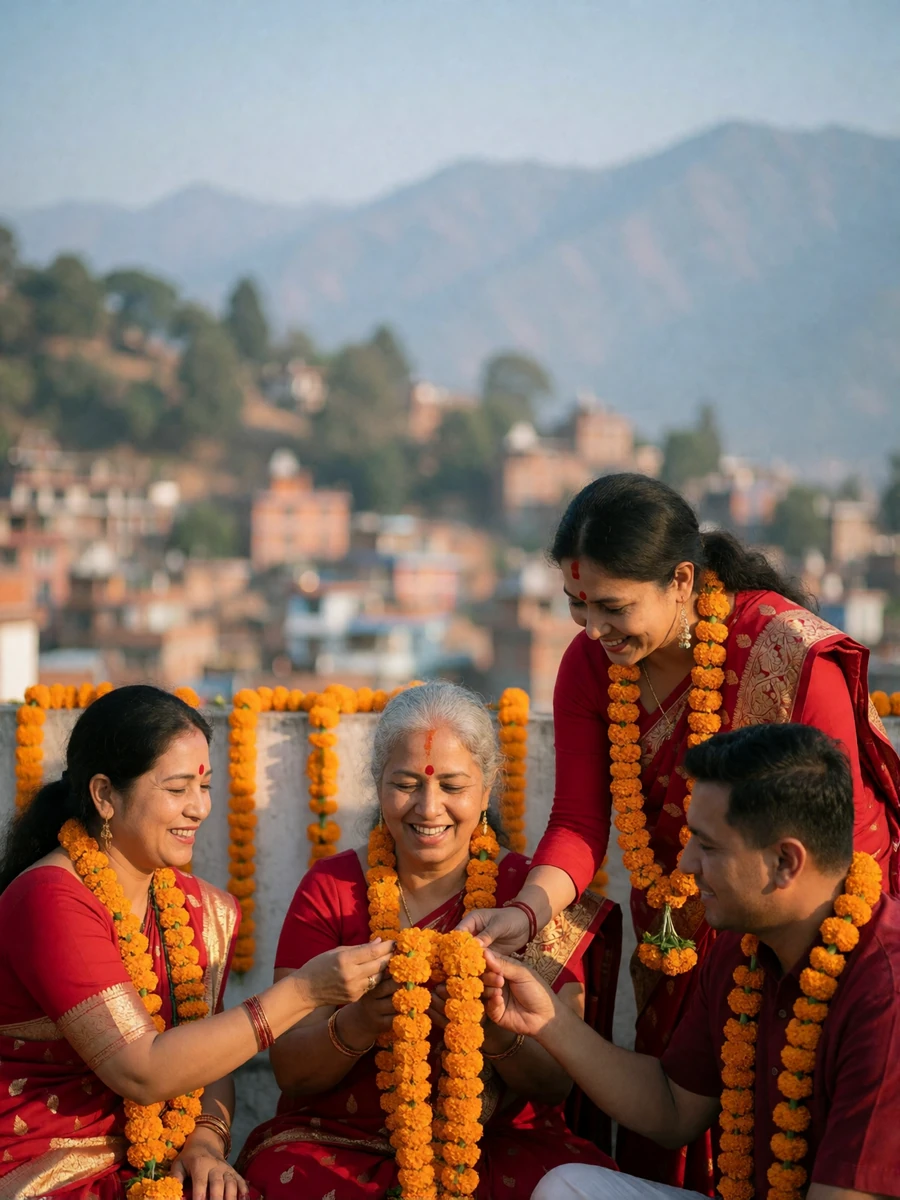
Two festivals shape the yearly rhythm for most Nepali families: Dashain, the country's longest and most important celebration, centred on family reunions, blessings from elders and tika ceremonies; and Tihar, the festival of lights, which honours siblings, animals and household bonds. If a member mentions preparing for Dashain or Tihar, she is describing something close to her family's core identity, not making small talk. Asking what her family does during these weeks is one of the most respectful openings you can offer. Our guide to cultural nuances in modern Asian dating covers this kind of context across several regions.
Respect for elders extends into everyday conversation. Nepali social custom generally favours a gentler, more indirect way of raising disagreement, closer in spirit to the courtesy you will also find described on our Bhutanese dating page. If something in a message concerns her, expect a soft signal rather than a blunt objection - read carefully, and ask rather than assume.
Diaspora communities across Europe, the Gulf and North America mean many Nepalese women already have relatives abroad, which tends to make cross-border relationships feel familiar rather than unusual. Once a connection has grown over weeks of correspondence, sending real flowers or a thoughtful gift through our courier delivery service is a gesture that lands well in Nepali culture - it shows visible, tangible effort rather than words alone, delivered as a genuine physical present rather than a virtual icon.